


Thessaloniki Part One: A Sign
- Oct 12, 2022
- 5 min read
Updated: Dec 15, 2022
Before I can even begin my journey, the most incredible place in European Jewish history finds me.

We are standing in front of the list of departures at the Athens airport and I don’t see a ten am flight to Alexandroupoli. I turn to Leorah for our flight info and immediately realize… “Oh Leorah… That’s not a flight to Alexandroupoli. You accidently bought us tickets to a city called… Thessaloniki?”
We step aside and take about three minutes to deliberate. It’s no longer logistically and financially feasible to go where we planned. Since Leorah is just joining me for a week while I’m traveling long-term, I lay out some options and let her decide. “Option one: We stay here and explore Athens. Option two: We find a more accessible island. Option three: We fly to this city neither of us have heard of but we bought tickets.” A minute later we’re heading to the gate, hyping each other up for “Mystery Greek City Adventure 2022!” “Who wants a planned island vacation of quiet beaches and waterfalls anyway? Maybe we were meant to go to this random city!” We had no idea how much that joke would ring true.
Mainly, I’m in Greece to learn about and connect with its Jewish communities. For years I’ve envisioned traveling the world and exploring global Jewry. And now I was finally able to start that journey. However my last job was all-consuming and my last month entailed staffing back-back trips to Israel, so I didn’t have much time for initial research. Greece was a cheap flight from Israel and according to the World Jewish Congress website, there were two Jewish schools in Greece. Perfect, I figured. Jews exist there and I’ll learn all about them soon enough.
Meanwhile, Leorah decided she could afford a quick vacation. I was excited to embark on my project, but I figured it could wait for one more week while I enjoyed a Greek island adventure with my best friend.
A couple hours after we land, we find ourselves on a free walking tour of our mystery city. I was surprised, Thessaloniki is a big city. It’s similar in size to Florence and Bilbao. But it didn’t feel big. It felt warm, welcoming and laid-back, like a cozy town that just happened to have huge buildings that went on forever. It was filled with aesthetic colorful restaurants and bars
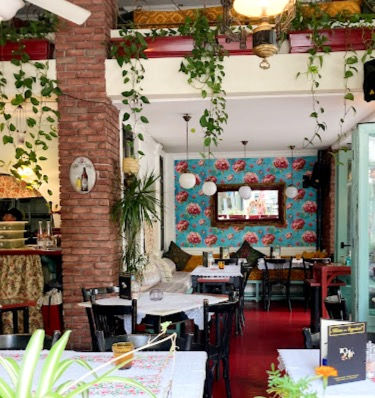
with cute seating spilling out onto the street. Each storefront was decked out with unique and quirky themed decor, complete with a bartender/barista/restaurant owner with a huge smile waving you in. They’re all beaming with Greek hospitality, ready to ask you a million questions about your life while excitedly treating you to whatever they passionately believe is Greece’s most delicious treasure.
We had that classic young and charismatic but information-overloaded tour guide. He was spastic with good energy but going on and on about names and dates of historical politicians, churches, and architectural influences that no one would recall. I remember thinking, I’ve been on tons of these tours across European cities, I never get much out of it, yet somehow always end up on another. But I guess I do enjoy slowly wandering the city when I first arrive and not having to make any decisions about where to turn. And who knows, maybe he’ll say something I’ll find interesting.
I’m spacing out, taking in all the brightly colored balconies full of plants and trying to sneak peaks at menus to brainstorm where to eat after. Then suddenly my ears perk up. Our guide casually explains,
“If you look closely at the cement on buildings, churches, sidewalks, or even the sides of the swimming pool, you can often find Hebrew or Ladino writing.”
My eyes searched the mass of tourists for Leorah, looking to exchange a confused glance for reassurance that we both heard that. I was shocked that he was suddenly discussing our people, who make up 0.02% of the population, and he knew the term Ladino (a dying language spoken only by Jews with Spanish descent). We couldn’t even begin processing the fact that remnants of our people are woven all throughout the physical fabric of our completely random mystery city.
I’ve been teaching Jewish history as a part of my professional career for four years, and informally for much longer. Once for a freshman year art assignment I created a representation of all the different immigration routes of the Jewish diaspora. I’d explain, to whoever was curious, that Jews were usually forced to live in the corners of town, often withstanding various laws that limited their employment and rights. We’re very proud of the brief eras where we enjoyed something close to equality and honor the few famed Jews who worked their way into some type of leadership position despite everything against them. And then usually every few centuries or so, there’d be some type of pogrom or antisemitic movement who would force converstion or murder/exile the whole Jewish population.
I don’t see Leorah but look back at the tour guide, now hanging on his words. He states, “Jews were the majority of the population here for over 500 years.”
Apparently, Thessaloniki was known as the Jerusalem of the Balkans and was one of the most important Jewish communities in the world. For more than 2,000 years, Jews would take refuge there from persecution all across Europe. The most came after the Spanish Inquisition when 15-20,000 arrived.
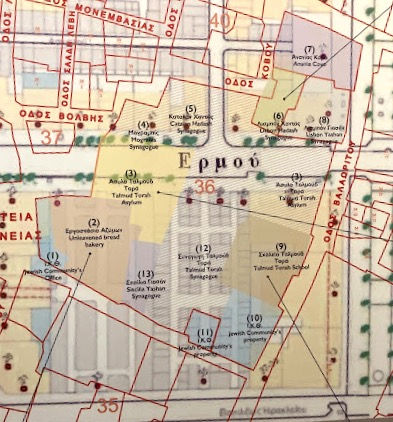
Then we became the majority population and brought the struggling city into a golden era, full of new imports and exports, financial prosperity, theological studies, poets, physicians, Rabbis, and other scholars. And just like Israel today, the community attracted and welcomed more and more persecuted Jews from all over. There were over 70,000 Jews here for five centuries, making up most of the city’s business, political, and academic ventures.
But the Ladino isn’t standing tall on Jewish headstones or synagogues anymore. It’s in pieces scattered across sidewalks, warehouse walls and swimming pools. 97% of the Jewish population was murdered in the Holocaust.
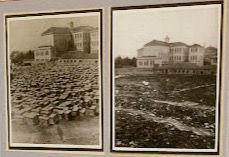
The Nazis destroyed all the Jewish establishments and ripped out all the headstones of the world’s largest Jewish cemetery at the time and reused the shattered ancient ruins as building material.
There we were, two Jewish girls walking down the streets of our random mystery city. We were surrounded by shattered fragments of what was the most thriving Jewish community for thousands of years; little echoes of what was the most essential place of our people, embedded in our surroundings.
I knew immediately that I would return here after Leorah left so I could devote time to connecting with Thessaloniki’s modern Jewish community. But on my first day of this trip where my overall purpose was to explore global Jewry, by chance landing in the “Jerusalem of the Balkans” felt like a sign. Before this summer I didn’t peg myself as a very spiritual person, but this ended up being the first of many experiences that made me feel like some type of force was guiding my path.
Click here for Thessaloniki Part: 2 The Echos to read about my experiences with the Thessaloniki Jewish community today and their youth echoing the undying spirit of their ancestors.

Comments